

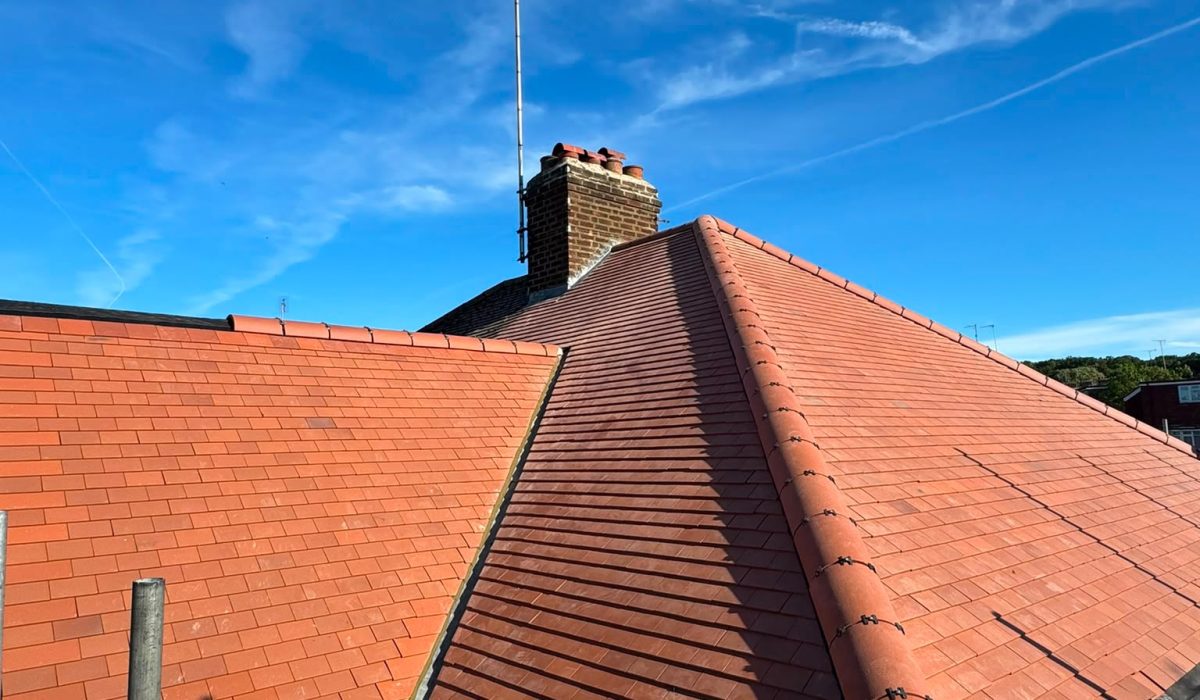
A chimney stack is the most exposed part of a house. It stands above the roofline, takes weather on every face, and sits exactly where the roof covering is at its most complicated. When a chimney fails, water often travels into the house and shows up on a chimney breast or ceiling some distance from the real cause. This guide explains the common problems and how each is fixed.
Why chimneys leak
- Failed lead flashings. The lead sealing the stack to the roof lifts, splits or has been replaced with sealant or cement.
- Crumbling mortar. Weathered joints between the bricks let water into the stack.
- Cracked flaunching. The sloping mortar crown that holds the pots can crack and let water in.
- Damaged pots or missing caps. Rain falls straight down a disused flue.
- Porous or spalling brickwork. Frost breaks the face off bricks that have absorbed water.
Warning signs
- Damp patches or staining on the chimney breast or nearby ceilings
- Crumbling, recessed or missing mortar joints
- Lifting or cracked lead around the base of the stack
- A leaning stack, cracks, or bricks with flaking faces
- Loose or cracked pots
- Pieces of brick or mortar in the gutters or garden
A leaning or unstable stack is a safety issue. Keep people away from the area below it and call a roofer promptly.
Repointing
Repointing means raking out loose mortar and filling the joints with new. The mortar must suit the brick: on period properties, lime mortar is generally the right choice because it lets the stack breathe, whereas hard cement can trap moisture and cause the brick to fail. Repointing is usually done from scaffolding for safe access.
Lead flashings
Flashing is the weatherproof seal between the stack and the roof. We fit lead step flashings, back gutters and aprons in the correct code of lead for each position. If your chimney is leaking but the stack itself looks sound, the flashing is the usual cause. On one recent re-roof we fitted new code 4 lead step flashing to both chimneys, as part of the job.
Flaunching, pots and capping
The flaunching holds the chimney pots and throws water clear of the stack. When it cracks it should be renewed, and loose pots should be rebedded or replaced rather than just cemented in. Chimneys you no longer use should be capped with a ventilated cowl, which keeps out rain, birds and debris while still letting air circulate to prevent damp.
When a chimney needs rebuilding
If the stack leans, has deep cracks or the brickwork is badly spalled, repointing is not enough. The affected courses, or the whole stack, may need to be taken down and rebuilt, ideally in matching bricks. We assess each stack and tell you honestly which it needs.
Chimney work and the roof around it
Because the roof and chimney work together, it makes sense to look at both at once. We repair slipped tiles and cracked lead around the stack in the same visit. If the roof is being replaced, the chimney lead is always renewed as part of the job. See our chimney repair service, roof repairs and new roof installation.
Frequently asked questions
Do I need scaffolding for chimney work?
Almost always, for safe working at height. It is shown as a separate line in your written quote.
Can I just seal a leaking chimney with sealant?
Sealant is a short-term cosmetic fix. A proper repair renews the flashing or mortar that has failed.
How can I check my chimney without a ladder?
Our drone surveys photograph chimneys, pots and flashings from the ground with no scaffolding.
Book a chimney inspection
We repair chimneys across Putney, Wimbledon, Wandsworth, Richmond, Kingston upon Thames, Twickenham, Balham, Tooting and surrounding areas. Call 020 3633 9588 or request a free inspection and quote.
Chimney repair checklist
- Look at the stack from the ground or from an upstairs window for cracks, a lean or missing mortar.
- Check the ceilings and chimney breast for damp patches after rain.
- Look in the gutters and garden for pieces of brick and mortar.
- Have the flashing and flaunching checked by a roofer at least once every few years.
- Cap any chimney you no longer use with a ventilated cowl.